
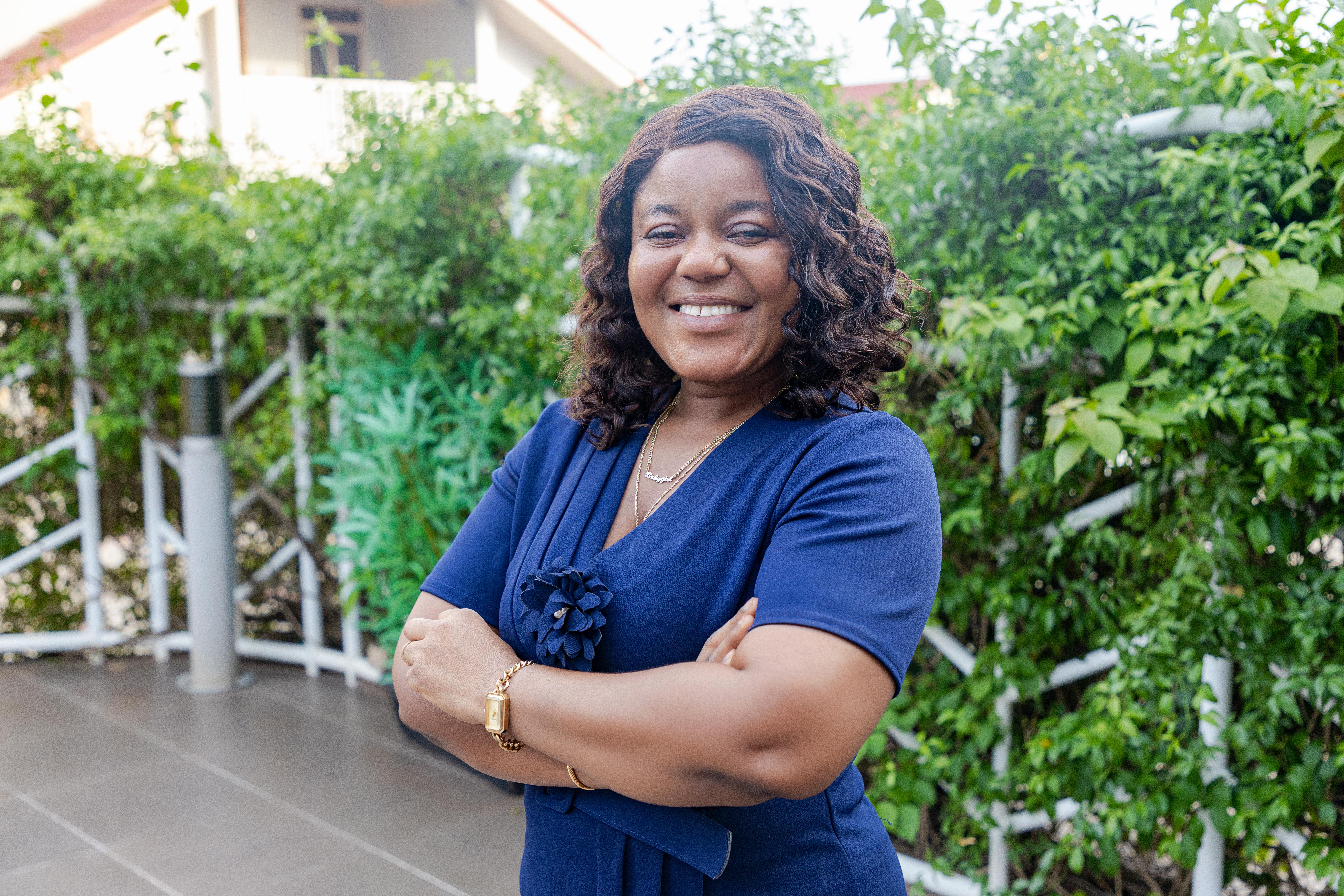
In March 2025, the Africa Health Collaborative at the Kwame Nkrumah University of Science and Technology, Kumasi welcomed a cohort of health professionals into its Community-Based Training (CBT) programme, an initiative supported by the Mastercard Foundation to strengthen health systems through innovation and entrepreneurship.
Among the participants was Ms. Betty Etornam Yibor, a public health nurse and community health advocate working in Mfantsema in Ghana’s Central Region. Driven by a desire to move beyond routine clinical care, she enrolled in the programme seeking practical skills to address persistent health challenges in her community.
“I was motivated to enroll because I wanted practical skills to move beyond my routine health service delivery,” she explains. “I wanted to design solutions for the real issues I was seeing, especially among adolescent girls and young women.”
Before the training, Betty had observed alarming trends: poor menstrual hygiene practices, limited access to sexual and reproductive health education, and increasing cases of teenage pregnancy, some involving girls as young as 12. These challenges were compounded by stigma and low health-seeking behaviour among young people.
The CBT programme became a turning point. Equipped with skills in health entrepreneurship, project design, stakeholder engagement and impact measurement, Betty transformed her ideas into a structured initiative, She Cares Foundation, established in May 2025.
Through She Cares Foundation, Betty leads interventions focused on adolescent health education, menstrual hygiene support, mentorship for girls and young women, and community engagement involving boys, teachers and parents.
A flagship innovation under her foundation is the Padbank Initiative, a school-based system that ensures girls have access to sanitary pads during school hours. The model is simple yet effective: a designated school coordinator manages distribution, usage data is recorded monthly, and supplies are restocked every six months by the foundation.
“This helps girls who start their periods unexpectedly or cannot afford sanitary products,” Betty notes. “It also allows us to track usage and plan effectively.”
Since launching, the initiative has been introduced in three schools across Mfantsema, with measurable improvements in attendance, confidence and menstrual health awareness.
Betty’s work has rapidly expanded beyond local boundaries. Through digital platforms such as LinkedIn, she has built international collaborations, including partnerships with organisations in Boston and connections with youth leaders across 25 countries.
Her mentorship programmes, delivered both in person and online via Zoom and Google Meet, have already impacted dozens of participants. An eight-week mentorship cohort launched in early 2026 brought together women from Ghana, Uganda and Nigeria.
“One memorable moment was when a young girl told me it was the first time she truly understood menstruation,” she recalls. “That’s when I knew this work was making a difference.”
Despite the progress, challenges remain. Cultural stigma around sexual and reproductive health continues to limit open discussions in schools and communities, while resource constraints pose operational difficulties.
However, the CBT programme equipped Betty with tools to navigate these barriers, including designing low-cost, scalable interventions, writing proposals to mobilise support, and applying community entry strategies to build trust. An unexpected but critical insight was the importance of including boys in interventions, helping to foster understanding and reduce stigma at the community level.
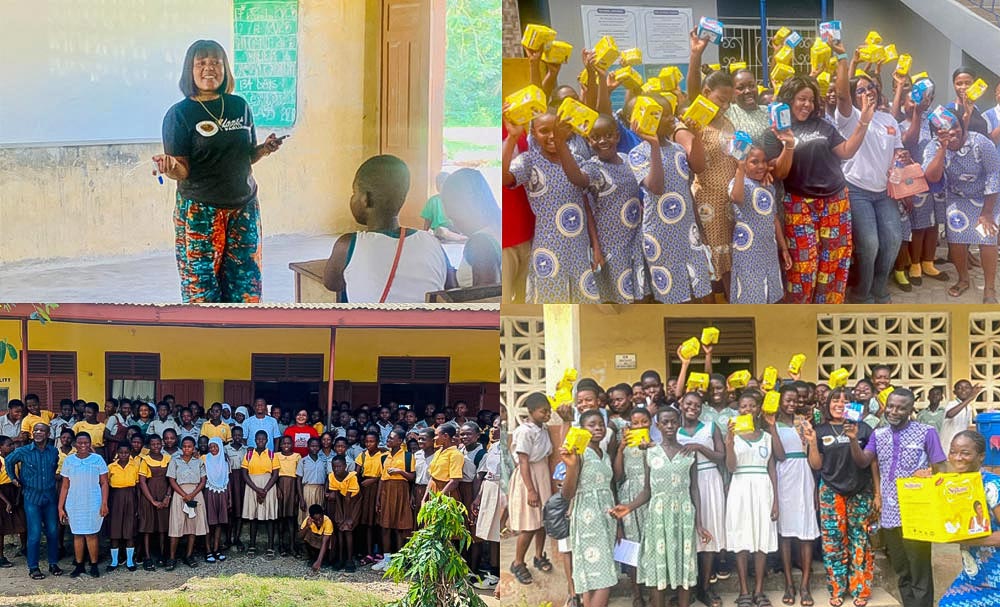
Looking ahead, Betty is focused on scaling her initiative nationwide. In May 2026, her team will expand into underserved communities in the Volta Region, including schools in the Adaklu District.
There are also plans to extend the model internationally, with early-stage discussions underway to replicate the initiative in Rwanda.
“We want to be everywhere, locally and globally, where young girls need support,” she says.
Reflecting on her journey, Betty describes the CBT programme as transformative:
“It was a turning point that transformed my passion for community health into a structured and powerful entrepreneurial journey.”
| Story: Emmanuel Offei (URO) |


